Swimming Pool Construction in Spain in 2026: Permits, Structural Codes, and Real Budgeting
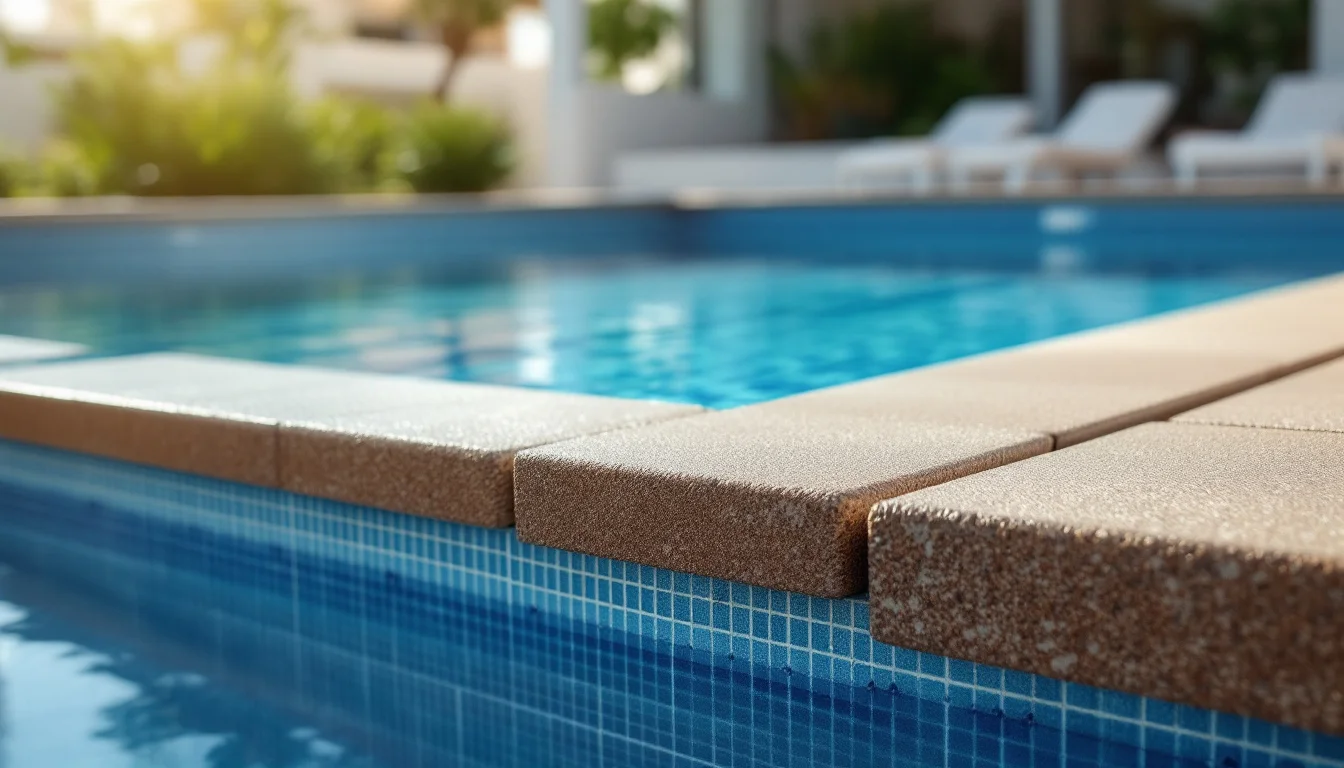
Adding a swimming pool to a Spanish property often feels like the ultimate Mediterranean dream, but executing that vision in 2026 requires navigating a highly regulated environment. The risks of hiring a local contractor to dig a hole without submitting formal paperwork have intensified significantly. Today, installing a permanent pool is treated as a major architectural project that demands strict municipal oversight, whereas temporary above-ground pools face lighter requirements. Property owners face a complex intersection of national structural codes, regional climate mandates, and localized taxation protocols.
From navigating modern drought restrictions that dictate water usage to managing the long-term impact on property taxes, understanding the legal and financial realities is critical for any buyer or investor. Bypassing these frameworks threatens the legality of the property itself. This guide details the essential permits, engineering standards, and true budgetary requirements for compliant pool construction across Spain.
Key Takeaways
- Zoning determines feasibility: Development on urban land is subject to standard municipal planning, but constructing a pool on rustic land is heavily restricted and often expressly forbidden.
- Major works typically require authorization: Any permanent, in-ground installation will generally require a formal Licencia de Obra Mayor and a technical project signed by a licensed professional, though in some cases a Licencia de Obra Menor may suffice depending on the size and scope — the distinction rests with the local authority.
- Fiscal impacts are permanent: Adding a fixed pool alters the property registry, directly increasing the long-term cadastral value and the annual IBI tax.
- Climate influences approvals: Regional drought protocols may delay or deny municipal permits if they restrict non-essential water usage.
Zoning and Climate Context: Where Can You Build in 2026?
Spanish law governs pool construction across three overlapping administrative tiers: national legislation, regional (comunidad autónoma) frameworks, and local municipal ordinances. According to Immoabroad, this multi-layered system creates highly localized rules, meaning a project approved seamlessly in one town might face insurmountable bureaucratic hurdles in the next municipality over.
Urban Versus Rustic Land
The most critical factor in determining whether construction is legally possible is the property's underlying land classification. Spanish law draws a strict distinction between urban and rustic parcels:- Urban land: Located within established city, town, or village boundaries and fully serviced by municipal infrastructure. Pool construction here is usually permitted, provided the design aligns with local planning guidelines.
- Rustic land: Categorized as agricultural or undeveloped land. Building infrastructure here is highly restricted, and swimming pools may be forbidden except in rare, explicitly documented cases.
The Impact of Regional Drought Restrictions
Beyond foundational zoning, the environmental context of 2026 plays a defining role in project viability. Water scarcity has fundamentally transformed how local governments evaluate outdoor construction. Some regions — specifically parts of Andalucía, Murcia, Valencia, and the Balearic Islands — now heavily scrutinize the ecological impact of new swimming pools.According to Immoabroad, these autonomous communities are increasingly imposing strict limits on new pool permits to control outdoor water consumption. Even on fully urbanized land, a municipality may delay or deny applications if regional drought protocols restrict non-essential water usage.
What Permits Does a Swimming Pool Require in Spain?
Understanding which specific permissions apply depends entirely on the design and permanence of the structure.
Permit Classifications by Design
Permanent installations trigger the highest level of regulatory oversight. According to Immoabroad, a Licencia de Obra Mayor (Major Works License) is needed for substantial building works, including in-ground or permanent swimming pools that require excavation, construction, and potentially changes to the property's structure. In-ground pools always require a permit of some kind. For prefabricated pools that involve construction work, the Idealista source notes that generally a minor works permit (Licencia de Obra Menor) will be required from the town hall, although a major works permit may be necessary depending on the size of the pool. Most permanent pools will fall under the major works category, but the distinction is ultimately at the discretion of the local authority. Pool permit approval can take from a few weeks to several months depending on municipal workload and project complexity.Conversely, temporary setups face a lighter bureaucratic load. Idealista (2026) outlines that an above-ground pool that does not require excavation or modification of the terrain does not strictly require a formal building permit, though some municipalities require a prior notification or a formal declaration of responsibility.
Urban properties present unique structural challenges. For a prefabricated pool installed on a terrace or rooftop, Idealista (2026) indicates that owners must secure standard municipal permits, provide a specialized technical report from an architect or engineer certifying structural load capacity, and obtain formal approval from the Comunidad de Propietarios (HOA) since terraces often form part of a building's shared structural footprint.
Additionally, all pools must comply with the minimum setback distances (retranqueos) established in applicable municipal and regional planning regulations — which may include the Plan General de Ordenación Urbana (PGOU), Normas Subsidiarias de Planeamiento, specific municipal ordinances, or regional codes (such as those in Catalonia and Andalusia) — that is, the minimum distance to be maintained between the pool and the boundaries of the plot or adjacent buildings. These distances vary by location and must be verified before any installation begins.
The Fiscal Impact on Property Records
The choice between a permanent and temporary pool directly influences local taxation. Fixed or in-ground prefabricated swimming pools are legally considered a permanent improvement to the property. According to Idealista (2026), these additions must be reported to the Catastro (Dirección General del Catastro).This registration formally affects the cadastral value, which in turn permanently raises the annual property tax (Impuesto sobre Bienes Inmuebles, or IBI). Inflatable pools that can be removed without construction work usually do not require this registration, though it should be noted that even some above-ground, relocatable pools may lead certain local councils to consider them as increasing the property's assessed value.
Matrix: Authorizations and Timelines
| Pool Type | Required Authorization | Technical Need | Approval Timeline |
|---|---|---|---|
| In-ground / Permanent | Licencia de Obra Mayor (in most cases; Obra Menor possible for smaller installations — at local authority discretion) | Full architectural project (proyecto técnico) | Weeks to several months |
| Rooftop / Terrace | Municipal permit & HOA approval | Engineer structural report | Varies by municipality |
| Temporary Above-ground | Prior notification (varies by municipality) | None (if no excavation) | Immediate to few days |
What Technical Standards (CTE and REBT) Apply to a Pool?
Once the appropriate administrative permits are identified, the physical construction must adhere to rigorous national safety protocols.
The Technical Project Requirement
A permanent swimming pool is not legally viable without professional engineering oversight. According to Immoabroad, it is a legal requirement that the pool project (proyecto técnico) be drawn up and officially signed by a licensed architect or an ingeniero técnico. This ensures the proposed design complies with all structural mandates before excavation begins.National Building and Electrical Codes
The drafting of the proyecto técnico must demonstrate compliance with the Spanish Technical Building Code (Código Técnico de la Edificación, CTE). As detailed by Immoabroad, adherence to the CTE is mandatory, covering standards for construction methods, overall stability, user accessibility, and health safety. Note that the CTE does not contain a dedicated chapter specifically for private swimming pools; its relevant provisions (structural safety, accessibility, etc.) apply to the ancillary works and the property as a whole, and specific pool safety requirements may additionally derive from regional or municipal regulations.The combination of water and electricity brings additional regulations into play. Idealista (2026) highlights that all electrical installations associated with a pool must comply with the Low Voltage Electrotechnical Regulation (REBT). This framework establishes mandatory minimum safety distances between the pool and any electrical element, and requires that all related wiring be carried out by an authorized electrician.
Private pools must also have an approved water filtration and purification system, and provision must be made for the evacuation of water from the pool to the sewage system or, where local regulations permit, to the ground.
Final Inspection and Legalization
The bureaucratic process extends beyond the physical build. Upon completion of the pool, the municipal office must be formally informed so they can carry out a final inspection. Immoabroad notes that only after passing this official review is the pool considered fully legal and eligible for registration in the property's title deeds. The licencia de obra must also be physically displayed on site for the duration of construction, as required by law.Real Budgeting: Beyond the €/m² Construction Myth
When calculating expected costs, many property owners rely exclusively on basic surface-area estimates, a practice that consistently severely underestimates the total capital required for a legal build.
Deconstructing the Baseline Cost
To establish a realistic financial picture, investors must look beyond standard structural quotes. Data published by Moraira Invest indicates that on the Costa Blanca, high-quality whole-property builds (such as a modern high-end villa) typically sit around €2,200–€3,000+ per square meter. It is crucial to note that this is a whole-build reference for a main house, NOT a direct pool price. The baseline construction cost of a pool is a separate calculation driven heavily by site-specific physical variables, including the terrain's slope, machinery access, and design complexity.Reframing this budget requires acknowledging that a pool project comprises:
- The underlying plot value and excavation.
- The physical construction materials and labor.
- Professional fees for architects and engineers.
- Municipal permits and local taxes.
- Post-construction utilities and landscaping.
- A dedicated contingency fund.
Tax Multipliers and Hidden Fees
The most frequently overlooked expense in these projections is local municipal taxation. According to Immoabroad, property owners must factor in the ICIO (Impuesto sobre Construcciones, Instalaciones y Obras). This is a dedicated construction tax based on the budgeted cost of the pool works, legally ranging from 0% to 4% of the declared value, though the exact rate is set by each municipality within this permitted band and should be confirmed locally.Calculating the true cost of ownership means combining the pool's construction cost with the ICIO tax, the mandated professional fees for the proyecto técnico, and the permanent, ongoing increase in annual IBI property taxes. Integrating these variables prevents the financial shock of underfunded projects.
FAQ: Common Questions About Pool Construction in Spain
Does a temporary pool permanently increase my property taxes?
Generally no. Inflatable or temporary above-ground pools that can be removed without construction work do not require registration with the Catastro and typically do not alter the property's cadastral value. However, it is worth noting that even some above-ground relocatable pools may lead certain local councils to consider them as increasing the property's assessed value, potentially affecting the annual IBI property tax. When in doubt, consult the local council.Are there water usage restrictions for filling a new pool?
Yes. Water scarcity has fundamentally transformed how local governments evaluate outdoor construction. Regions like Andalucía, Murcia, Valencia, and the Balearic Islands increasingly scrutinize the ecological impact of swimming pools. Municipalities may delay or deny permit applications if regional drought protocols restrict non-essential water usage. Municipalities may also require a water source declaration confirming that mains supply or a registered legal well will be used.Will an unregistered pool prevent me from selling my house?
Yes. If a permanent pool lacks the final municipal inspection and is therefore absent from the property's title deeds, it creates a serious legal deficiency. Buyers' lawyers routinely flag these discrepancies during due diligence, potentially jeopardizing the transaction.Conclusion
Navigating the stringent mandates of the CTE, local zoning laws, and evolving regional climate restrictions requires meticulous planning and consistent professional oversight. A legally constructed, properly documented pool that clears final municipal inspections functions as a secure asset that tangibly enhances real estate value. Bypassing official authorizations transforms a luxury installation into a complex legal liability.
When purchasing a Spanish property with an existing pool, buyers must proactively verify its legal status. A basic due diligence process should confirm that the pool appears on the property's title deeds, matches the official cadastral records, and possesses a final municipal inspection certificate. Ensuring these elements align guarantees the property remains protected against municipal enforcement and future transaction delays.