How to Waterproof a Terrace or Flat Roof: Step-by-Step Technical Guide
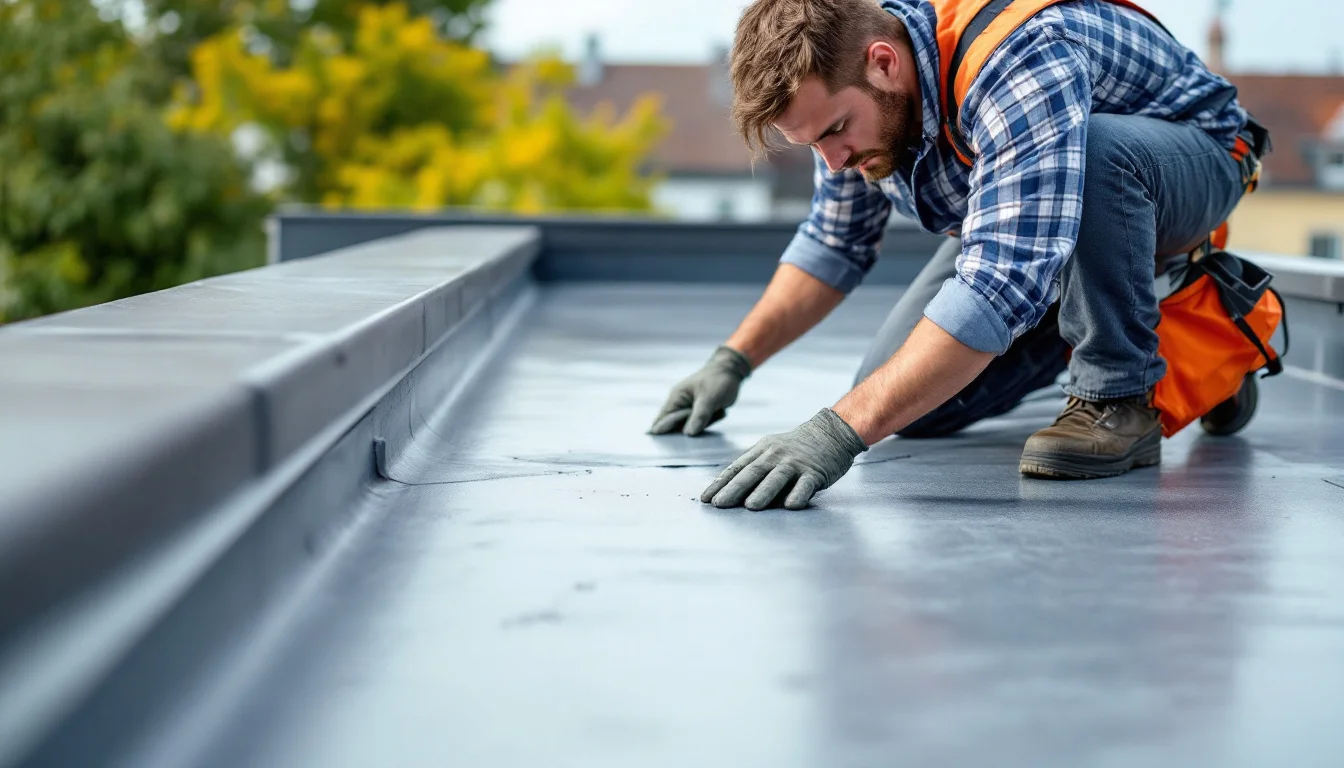
Flat roofs present a distinct set of structural engineering challenges that fundamentally differ from those of traditional pitched architecture. Because they do not shed water as quickly, flat roofs are inherently more vulnerable to continuous water ingress. While a sloped design relies on gravity to rapidly evacuate precipitation, a flat terrace must act as a perfect, impermeable holding basin until drainage systems can clear the surface. Consequently, even a single, small weakness in the surface layer can develop into a persistent and damaging leak.
When this barrier is compromised, identifying the exact point of failure becomes a complex diagnostic problem. The mechanics of horizontal water travel dictate that a leak on a flat roof can appear far away from the actual water entry point inside the building. Moisture infiltrates a microscopic breach. It then navigates horizontally through substrate layers before finally penetrating the interior ceiling. This indirect routing makes diagnosis significantly harder for property owners and maintenance teams. Waterproofing a flat expanse is therefore not merely a cosmetic upgrade or a basic painting task; it is a critical engineering intervention designed to halt horizontal moisture migration and protect the underlying architecture from progressive deterioration.
Key Takeaways
- Structural risks: Once the original surface coating on a flat terrace fails, water bypasses the coating and is absorbed by the porous slab, eventually leading to embedded steel oxidation over time.
- Material selection: For many domestic and commercial flat roofs, a polyurethane liquid membrane is widely considered a strong choice, though the best solution depends on the specific roof type, condition, and budget.
- Performance balance: Polyurethane liquid membranes are valued for balancing durability, ease of application, flexibility, and long-term weather resistance.
The Anatomy of a Leak: Why Flat Terraces Fail
The Breakdown of Surface Defense
A failing flat terrace is a progressive structural event rather than a static localized issue. The terrace functions as the primary environmental shield for the structure beneath it. When intact, it prevents precipitation and standing moisture from interacting with the underlying architecture. However, degradation begins silently at the microscopic level. Once the original coating on a flat terrace fails, the protective envelope is broken. Standing water bypasses the initial barrier and infiltrates the porous layers directly below the surface.Infiltration of the Concrete Slab
After bypassing the compromised outer coating, water systematically enters the concrete slab itself. Because concrete is naturally porous, a lack of a functional waterproof barrier turns the slab into a sponge that actively absorbs and retains standing moisture from the roof above.The Threat to Reinforcement Steel
This deep infiltration triggers a severe, secondary mechanism of decay that threatens the entire building. As moisture penetrates deep into the slab, it attacks the reinforcement steel from within. When this embedded steel oxidizes—a process typically requiring moisture, oxygen, and sufficient carbonation or chlorides to break down the steel's passive layer—it expands forcefully. This expansion can cause the surrounding concrete to crack and spall. This internal pressure creates larger fissures. These larger fissures accelerate the rate of water ingress, forming a self-reinforcing deterioration. A minor failure in the external surface coating can therefore evolve into significant structural damage, progressively compromising the integrity of the roof slab.Material Science: Why Seams Are the Enemy
The Fundamental Flaw of Traditional Methods
Historically, flat roof protection relied heavily on overlapping materials to create a barrier against the elements. Traditional flat roofing systems rely on overlapping sheets, membranes, or felt. The inherent weakness in this methodology lies entirely in the joints. Seams are common failure points. They are continuously subjected to thermal expansion and contraction, which stresses the overlaps over time. Once a seam lifts or separates, water can effortlessly travel underneath the surface layer, bypassing the primary waterproof defense while remaining largely invisible to standard visual inspections.The Shift to Liquid Polyurethane Systems
To counteract the inherent vulnerabilities of overlapping joints, modern structural maintenance prioritizes continuous, joint-free barriers. By forming a single, continuous layer over the entire substrate, these advanced chemical systems eliminate the seams that plague traditional felt installations. Polyurethane liquid membranes are valued for balancing durability, ease of application, flexibility, and long-term weather resistance, allowing them to stretch and recover alongside the building's natural thermal movements.Comparative Longevity and Performance
Premium polyurethane liquid membranes can offer decades of service life when properly installed, though actual longevity depends heavily on the specific product, application thickness, environmental exposure, and ongoing maintenance. Understanding the operational differences between various roofing strategies clarifies why the construction industry increasingly favors seamless liquid applications.| Waterproofing Strategy | Characteristics | Common Vulnerabilities |
|---|---|---|
| Traditional Overlapping Systems | Rely on joined sheets, felt, or membranes | Seams are common failure points; water travels underneath once lifted |
| Polyurethane Liquid Membrane | Balances flexibility with long-term weather resistance | Premature failure occurs if surface preparation is inadequate |
| Single-Pack Elastomeric Coating | Formulation reduces the risk of mixing errors | Substrate adhesion fails entirely if cleaning or priming is skipped |
| Two-Component Cementitious System | Provides rigid, heavy-duty structural protection | Less suitable for casual domestic repairs |
The Step-by-Step Technical Application Protocol
Substrate Integrity and Deep Cleaning
The success of any liquid membrane system relies entirely on the condition of the substrate beneath it. If an applicator skips cleaning, dirt and organic matter will prevent the new membrane from adhering to the deck. Consequently, the waterproof bond fails, and the leak inevitably returns. The substrate must be comprehensively cleaned, structurally stable, and entirely free of debris before any chemical application begins.Defect Repair and Priming
Once clean, the structural integrity of the deck must be restored. Skipping crucial crack repair means existing fissures will quickly telegraph through the new coating, compromising the newly laid system. Furthermore, skipping priming prevents the liquid membrane from forming a chemical bond with the concrete. Inadequate surface preparation, the wrong primer, or poor detailing around complex edges and drains can all drastically shorten the life of a flat roof waterproofing system.Membrane Application Strategy
During the final application phase, achieving the correct coating depth is critical for long-term structural defense. Executing too thin an application leaves the roof vulnerable to mechanical damage and premature UV degradation, reducing the effectiveness of the liquid system. The material must be applied evenly and at the manufacturer's specified thickness to guarantee the required tensile strength.Selecting the Right Formulation
The choice of waterproofing material must strictly match the environmental demands of the terrace and the applicator's technical capability. A single-pack formulation reduces the risk of mixing errors. It also simplifies the overall curing process for amateurs. Conversely, two-part systems are less suitable for casual domestic repairs but highly effective for robust areas subjected to continuous foot traffic or mechanical stress.The Economics of Prevention: Benchmarks and Financial Safeguards
Installation Cost Benchmarks
Evaluating the financial implications of roof maintenance requires a clear understanding of installation rates. Professional installation costs for domestic flat roofs vary significantly and are influenced by the region, the roof's baseline condition, and the chosen waterproofing system. For complex or heavily damaged roofs, the capital outlay naturally increases as more intensive preparation and detailing are required. Because pricing fluctuates based on these variables, actual quotes should always be sought from qualified local contractors.The Cost of Structural Repair
The true financial value of proactive waterproofing is best understood by analyzing the structural damage it averts. The upfront cost of materials for a proactive waterproofing job is generally a small fraction of the expense required for major structural remediation if the slab is allowed to fail. While exact cost ratios vary widely depending on the market and the extent of deterioration, the underlying principle — that early waterproofing intervention is substantially cheaper than remedying structural damage — is consistent with guidance across all construction sectors. Deferring maintenance once the original surface coating begins to fail presents a significant financial risk, and a liquid membrane application is best understood as a long-term investment in a building's structural envelope rather than a routine maintenance expense.Frequently Asked Questions (FAQ) on Flat Roof Waterproofing
Can I waterproof directly over existing terrace tiles?
Waterproofing over an old roof or tiles is only suitable if the existing surface is entirely sound and properly prepared. If your terrace features loose tiles, an unstable substrate, trapped moisture, or large failing sections, making a direct overcoat is highly inappropriate. In such cases, the compromised layers must be completely removed to expose a solid foundation.Conclusion: The Era of Active Roof Management
Terraces and flat roofs can no longer be viewed as passive architectural lids; they are dynamic structural elements subjected to relentless environmental stress and water pooling. Moving forward, sustainable building management requires engineering continuous, highly flexible barriers that anticipate structural movement rather than merely reacting to it. By shifting away from seamed materials and adopting meticulous preparation protocols for liquid membranes, property owners secure a definitive defense mechanism. Ultimately, rigorous horizontal waterproofing acts as the primary safeguard for a building's entire structural envelope, transforming a historically vulnerable surface into a resilient asset engineered to withstand extreme climates.