How to Choose the Right Flooring for Every Room: A Technical Guide for 2026
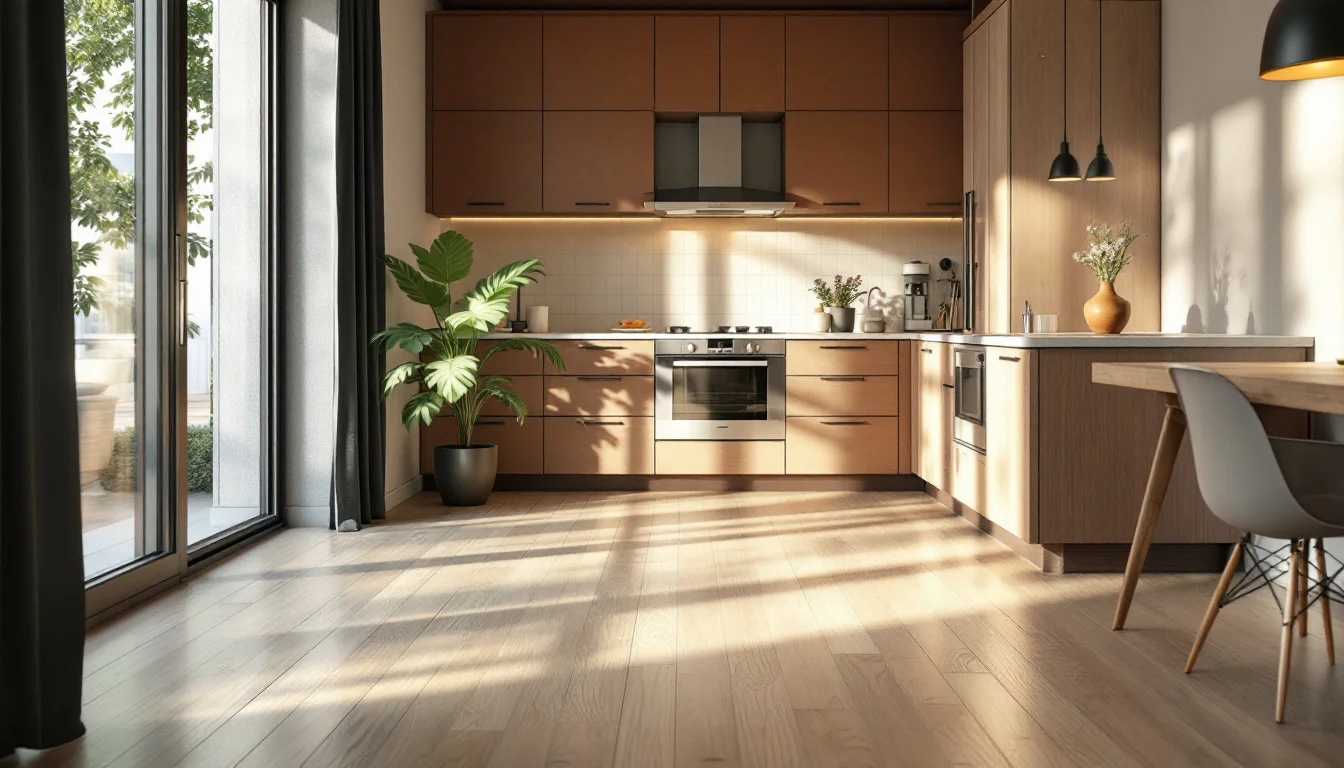
Selecting materials for a modern home renovation requires abandoning a widespread misconception. According to Para Tu Reforma, there is no single perfect floor for every room: the most suitable flooring depends on the characteristics and needs of each specific space. While a floor might work flawlessly in a dry, low-traffic bedroom, solid timber can expand and contract significantly under the localized humidity of a kitchen.
Choosing flooring is fundamentally an engineering problem. Instead of seeking a universal material, property owners must match specific physical stressors—such as moisture pooling, thermal expansion, and mechanical impact—to the technical tolerances of the available materials.
A successful installation relies on objectively evaluating how high-fired porcelain, multi-layer woods, and floating laminates react to these environmental pressures. Aesthetics matter, but visual appeal remains dependent on a material's structural capacity to survive the daily realities of its environment.
Key Takeaways
- No universal solution: Suitability depends entirely on the specific characteristics and physical stressors of each space.
- Porcelain for wet areas: Porcelain tile's low water absorption makes it highly resistant to humidity and temperature changes.
- Wood stability: Multi-layer wood offers high stability against changes in temperature and humidity compared to solid timber.
- Laminate flexibility: Moisture-resistant laminate can handle kitchens and bathrooms if maintained according to manufacturer guidelines.
What Are Your Room-by-Room Flooring Requirements?
Before evaluating specific materials, it is necessary to map the physical demands of the home. Para Tu Reforma notes that different rooms impose different flooring requirements: some areas need moisture-tolerant and slip-resistant flooring, others need scratch resistance, and others need warmth and tactility.
Approaching a floor plan as a series of isolated micro-climates prevents premature material failure.
How Do You Map Physical Stressors?
To categorize these requirements, spaces generally fall into distinct stress profiles based on daily use:
- Moisture and Slip Zones: Areas exposed to standing water, high airborne humidity, and frequent chemical cleaning. These environments prioritize materials with low porosity and high surface friction.
- Impact and Traffic Corridors: Spaces subjected to concentrated foot traffic, moving furniture, and dropped objects. These zones require high-density surfaces capable of resisting localized scratching and compression.
- Thermal and Tactile Spaces: Rooms designated for rest or extended static living. These areas demand materials that interact favorably with ambient heating systems and provide physical warmth underfoot, a quality highlighted by Yvyra for natural wood finishes.
What Flooring Survives a Bathroom or Kitchen?
These spaces undergo daily cycles of ambient moisture, direct liquid spills, and rapid temperature fluctuations. Navigating these extremes requires materials engineered for dimensional stability.
Why Choose High-Fired Porcelain?
According to Para Tu Reforma, porcelain tile flooring is a type of ceramic tile manufactured at extremely high temperatures and high pressure. This specific thermal process dramatically alters the physical structure of the tile, fusing the clay into a highly dense, non-porous matrix.
Because of this manufacturing method, porcelain flooring has low water absorption. Its resistance to humidity and sudden changes in temperature makes it an ideal choice for bathrooms or kitchens. The material does not possess the capillary structure required to absorb standing water, making it highly resistant to warping or rot. Furthermore, its rigid density helps it withstand heavy impacts from dropped pots or utensils without surface denting.
Is Laminate Safe for Kitchens and Bathrooms?
Traditionally, floating floors were completely excluded from wet zones due to the risk of core swelling. However, according to Yvyra, modern engineering has altered this binary choice. Moisture-resistant models of laminate flooring can be installed in bathrooms and kitchens, following the manufacturer's maintenance instructions.
These specialized laminates rely on tight mechanical locking joints and treated core materials to repel surface water. Unlike porcelain, however, this resistance is conditional. The material is designed to handle temporary exposure and ambient humidity, but it inherently relies on strict adherence to maintenance guidelines. Standing water left for extended periods can still penetrate the seams, making this option highly effective but more maintenance-dependent than porcelain tile.
How Do You Manage Thermal Shifts and Acoustics in Living Spaces?
Moving away from wet zones, the primary engineering challenges in bedrooms and living rooms shift toward thermal regulation and acoustic management. These are environments where physical warmth and sound absorption take precedence over absolute waterproof capabilities.
How Do Natural and Engineered Wood Compare?
For premium aesthetic spaces, natural materials remain highly sought after. According to Yvyra, solid wood flooring is more authentic and luxurious, and while it requires special care, its durability and aesthetics make it the preferred choice for a premium finish. However, solid timber is highly reactive to environmental changes, expanding and contracting significantly with ambient moisture and heat.
To counter this volatility without sacrificing the organic finish, engineers utilize layered construction. Yvyra notes that multi-layer wood flooring is composed of several layers of wood or wood derivatives and offers high stability against changes in temperature and humidity. By cross-hatching the grain directions in the lower core layers, multi-layer formats restrict the natural movement of the top veneer. Because of this structural stability, Yvyra highlights that multi-layer wood flooring is ideal for high-traffic areas and compatible with underfloor heating.
Why Use Acoustic and Thermal Baseline Layers?
For non-wood alternatives, the structural foundation is equally critical to the room's comfort profile. Yvyra explains that the insulating base under laminate flooring reduces noise and improves the efficiency of underfloor heating.
This underlayment serves two distinct mechanical functions:
- Acoustic dampening: It absorbs the hollow reverberation typically associated with hard floating surfaces, softening footfalls in busy corridors.
- Thermal transmission: A properly rated insulating base facilitates the even transfer of radiant heat from subfloor systems up into the living space, preventing energy loss.
Do You Need Glue or Nails to Install Laminate?
Beyond the daily performance of the material, the logistical reality of the installation heavily dictates project feasibility. Material cost is frequently overshadowed by the labor requirements and subfloor preparation necessary to execute the design.
As highlighted by Para Tu Reforma, porcelain materials tend to be more expensive than other types of home flooring, and the cuts required for installation are not always easy. Laying high-density, high-fired ceramic requires specialized cutting equipment, mortars, and extended curing times. Furthermore, rigid tiles demand a sufficiently level subfloor; any significant deflection in the underlying structure can lead to cracked grout lines or damaged tiles.
Conversely, modern floating floors bypass much of this mechanical friction. According to Yvyra, laminate flooring is installed without the need for nails or glue, resting on an insulating base. This decoupling from the subfloor removes the need for volatile adhesives and complex leveling compounds. A click system allows laminate flooring to be laid quickly over adequately flat existing floors, which is crucial for rapid renovations and drastically reduces the timeline and specialized labor costs associated with rigid formats.
How Do You Compare Flooring Options?
To streamline the specification process, the variables discussed above can be organized into a functional matrix. According to Yvyra, the four selection criteria for choosing laminate flooring are: use of the space, exposure to moisture, compatibility with the heating system, and style and finish.
Applying these criteria across the primary material categories yields a clear comparative framework for decision-making.
| Material Type | Moisture Tolerance | Heating Compatibility | Installation Labor |
|---|---|---|---|
| Porcelain Tile | Exceptional (Non-porous) | High (Conductive) | Intensive (Mortar/Cuts) |
| Multi-Layer Wood | Moderate (Tolerates ambient shifts) | High (Structurally stable) | Moderate (Often click/float) |
| Laminate | Moderate (If treated) | High (With rated base) | Minimal (Floating click) |
This matrix highlights that selecting a floor requires compromising on at least one axis. A highly moisture-tolerant floor will demand intensive labor, while a fast-installing floating floor will require stricter environmental maintenance.
How Long Will the Flooring Last?
Understanding a material's lifecycle prevents costly replacement cycles. Durability is not solely determined by the initial purchase price, but by the physical density of the core material and the owner's commitment to baseline maintenance.
According to Yvyra, high-density materials in flooring support prolonged use without deformation. When heavy furniture compresses a floor over several years, lower-density cores will crush, leading to structural sagging and separated joints. A high-density core resists this static compression, helping the surface remain level and keeping the locking mechanisms engaged.
However, structural density must be paired with careful surface management. According to Yvyra, with proper maintenance, premium laminate flooring with a high wear class can last up to 20 years while maintaining its appearance and functionality.
What Are the Maintenance Imperatives?
Achieving maximum lifespan requires specific interventions:
- Utilizing pH-neutral cleaning agents to prevent the chemical degradation of protective wear layers.
- Deploying felt protectors under heavy structural loads to distribute compression weight.
- Immediately addressing localized water spills, even on moisture-resistant formats.
Conclusion
As interior spaces increasingly integrate advanced underfloor technologies and demand faster renovation cycles, the mechanics of material selection continue to evolve. The shift away from permanent, glued-down applications toward highly engineered floating systems reflects a growing need for architectural adaptability. While traditional rigid formats maintain their superiority in extreme wet environments, multi-layer structural stability now offers technical solutions for nearly every other zone. Ultimately, matching the exact physical tolerances of a material to a room's specific stressors helps support a floor that performs effectively long after the initial installation is complete.