Heat Pumps in Spain: Running Costs and Lifetime Savings
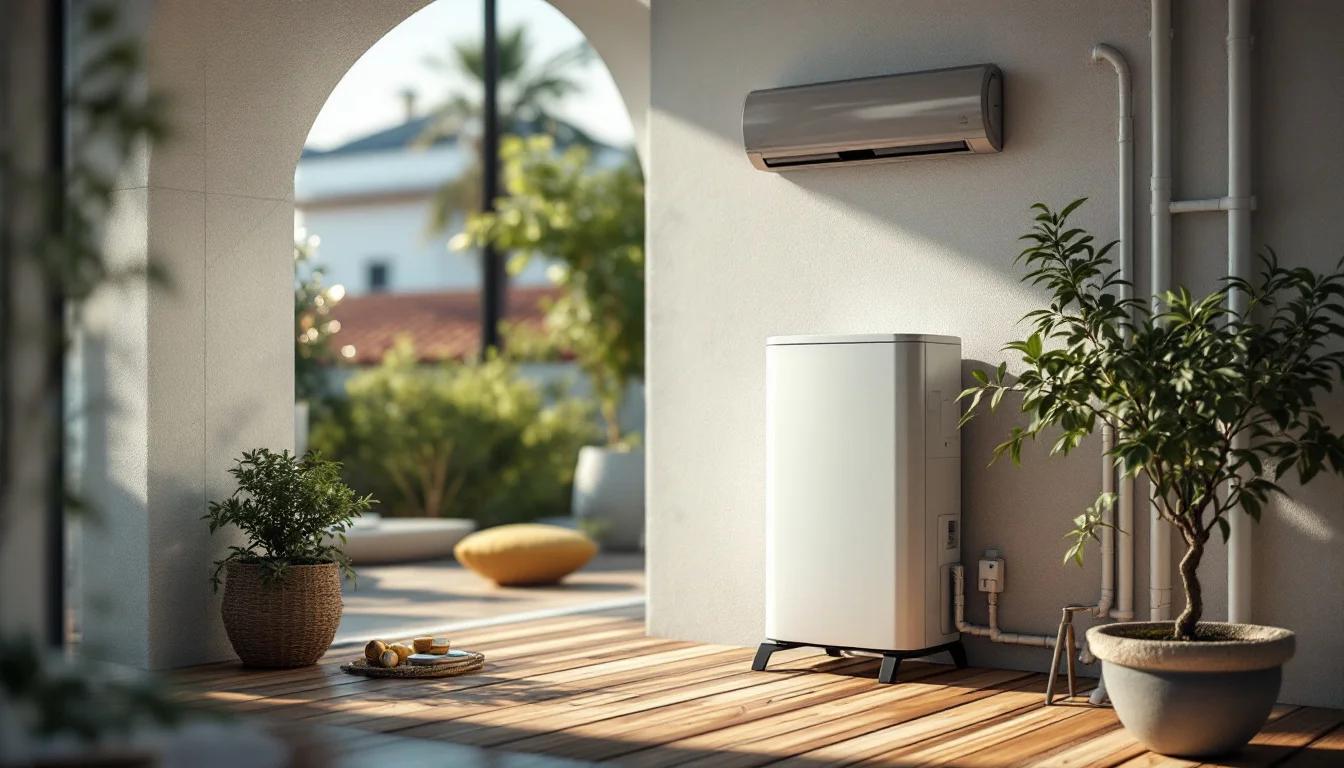
Many property owners arriving in southern Europe anticipate endless summer weather, only to discover a harsh dual-climate reality. Winter night temperatures in Spain can drop to 5-10°C inland and along the coast, demanding robust thermal support (Spain.info). Conversely, summer temperatures on the Costa Blanca, Costa Cálida, and Costa del Sol regularly exceed 35°C, making cooling infrastructure essential (Mediter, 2026). Heating and cooling requirements differ substantially by location: warmer Mediterranean and southern areas may have substantial summer cooling requirements, while heating demand can be more important in inland, northern, and higher-altitude areas (Evergreen Electrica).
Addressing these seasonal extremes is complicated by regional architectural history. Unlike in northern Europe, most Spanish homes were historically built without central heating. This legacy makes the choice of a modern heating and cooling system a foundational decision for property owners retrofitting older villas or equipping new builds.
When facing this necessary upgrade, a common reflex is to seek out the cheapest standalone heating appliances. However, relying purely on upfront sticker prices obscures the severe operational costs of outdated systems over time. Evaluating climate control purely as an initial purchase ignores the monthly energy reality. A strategic approach requires looking past the installation invoice to understand the long-term return on investment that modern, integrated climate technologies offer within the Spanish real estate market.
Key Takeaways
Before exploring long-term system value, the primary operational realities of climate control in Spain can be summarised briefly:
- Conversion Efficiency: Reversible heat pumps can generate 2.8–4.0 kW of heat for every 1 kW of electricity consumed on average over a Mediterranean winter, expressed as a Seasonal Coefficient of Performance (SCOP) of 2.8–4.0 (Mediter, 2026). Real-world performance varies with outdoor temperature, system sizing, and building insulation; the upper end of this range is achieved in mild climates such as coastal Spain but should not be assumed for all operating hours. Deploying a heat pump in older, uninsulated building stock significantly reduces effective efficiency, making structural retrofitting an important prior step.
- Hidden Winter Costs: According to indicative running-cost comparisons, plug-in electric radiators can cost €150–€300 per month during peak winter use for larger properties or under heavy, continuous operation (Mediter, 2026).
- Synergistic Solar Returns: Pairing climate technology with solar photovoltaics can substantially reduce monthly cooling and heating bills. According to one commercial property guide, solar installations in southern Spain typically reach payback in 6–10 years, though actual payback depends on system size, consumption profile, electricity tariffs, and grant support (Sparkanda; Mediter, 2026).
- Lifetime Value Over Price: The true financial advantage in retrofitting properties requires calculating the initial investment alongside expected energy consumption, maintenance, and total system lifespan.
Understanding Lifetime Value
The True Cost of Climate Control
Selecting the most sensible heating and cooling solution depends entirely on the building structure and how the property is utilized. According to Evergreen Electrica, there is no universally cheapest heating option for every property in Spain. Instead, homeowners are advised to evaluate the lifetime cost of a system—combining the initial investment, installation fees, expected energy consumption, maintenance requirements, and expected lifespan—rather than judging an option by its purchase price alone.
Baseline Installation Realities
The temptation to install simple, low-cost resistive heating or single-room cooling units is driven by a desire to minimize initial capital expenditure. Based on current market figures, the installed cost of a single split unit in Spain ranges between €600 and €1,200 per unit (Mediter, 2026).
While this entry point appears attractive for cooling an isolated bedroom, outfitting an entire property piece by piece quickly becomes inefficient. Moving toward a centralized approach requires a larger upfront commitment. Some homeowners explore ground-source heat pumps, which exchange heat with the ground rather than the outside air. While they can offer efficient operation, they generally involve more complex installation because ground works are required (Evergreen Electrica). Because of these hurdles, the initial quote becomes a barrier for many property owners, pushing them toward cheaper, plug-in alternatives for winter heating.
However, this capital expenditure must be contextualized against recurring utility bills. Inexpensive initial solutions exact a heavy monthly toll on the household budget.
Is a Heat Pump Cheaper to Run?
Monthly Expenditure Analysis
The operational advantage of heat pump technology is rooted in its coefficient of performance (COP), which describes how much heat energy is delivered per unit of electrical energy consumed. Rather than converting electricity directly into heat at a 1:1 ratio—as resistive electric radiators do—a heat pump transfers existing heat from the outside air, achieving a Seasonal Coefficient of Performance (SCOP) typically in the range of 2.8–4.0 under real-world winter conditions in Mediterranean Spain (Mediter, 2026; Evergreen Electrica). Real-world performance depends on outdoor temperature, system sizing, and building thermal performance; SCOPs at the lower end of the range should be expected during colder periods or in poorly insulated buildings. This efficiency advantage is well-suited to the Spanish coastal climate, where winter temperatures rarely drop below freezing on the coast, allowing heat pumps to maintain relatively high efficiency throughout the heating season (Mediter, 2026).
This efficiency gap becomes significant when comparing monthly winter heating bills. Modern air-to-air heat pumps—which are effectively what most split-system air conditioners are—can heat a home efficiently in winter by extracting heat from the outside air and transferring it indoors, even when it is cool outside. For properties integrating with existing centralized infrastructure, an air-to-water heat pump is an excellent alternative. According to Evergreen Electrica, air-to-water systems can provide heating through radiators, fan coils, or radiant underfloor heating, while also providing domestic hot water at high efficiency.
Lifecycle Returns
The multi-split heat pump system can offset a significant portion of its capital cost through energy savings when compared to resistive heating. Heat pumps are also described as cheaper to run than gas or oil heating in the Spanish context (Mediter, 2026), though the margin relative to gas depends on local electricity and gas tariffs, which vary and change over time. When combined with onsite solar generation, operational costs can be reduced substantially.
The Ecosystem Approach: Pairing Heat Pumps with Solar and Insulation
The Spanish Climate Control Hierarchy
Deploying a mechanical unit in a vacuum leaves substantial financial returns untapped. The Spanish Climate Control Hierarchy involves a structured, three-tiered approach: reducing thermal demand, generating localized power, and deploying efficient conversion.
- Passive Demand Reduction (Insulation)
- Localized Energy Generation (Solar PV)
- Highly Efficient Conversion (Heat Pumps)
Unlocking Maximum Savings
When these elements interact, the financial profile of the property changes substantially. This ecosystem can significantly reduce exposure to volatile grid pricing, though the degree of insulation from grid costs depends on battery storage capacity, consumption timing, and the proportion of demand met by self-generated electricity.
Navigating Renovation Subsidies (With Caution)
The Reality of Renovation Grants
The initial capital requirements for achieving this ecosystem represent a significant financial outlay. Consequently, property owners frequently search for institutional funding to offset these retrofit costs. Severe caution is warranted when integrating generalized grant figures into a strict financial projection.
Verify Before Budgeting
Commercial real estate guides sometimes cite coverage rates of 45–70% for insulation, solar panels, and heat pumps under Next Generation EU funds, though higher percentages are typically only reached through exceptional combinations of regional and national aid. These figures are indicative only, sourced from commercial overviews rather than official programme documentation, and should not be treated as guaranteed amounts accessible to all applicants. Funding availability is subject to precise regional allocation by autonomous communities, strict technical qualifying criteria, and administrative processing queues. For example, the Valencian Community, Murcia, and Andalusia each run their own distinct grant programmes for home energy improvements (Mediter, 2026). Similarly, some commercial guides cite potential IBI (property tax) discounts and income tax deductions related to energy efficiency improvements for primary residences; these incentives, where they exist, are not uniform across all jurisdictions, and their current availability, scope, and applicable rates must be confirmed with the relevant tax authority or municipality.
Homeowners should never proceed with an installation assuming an automatic reimbursement. Property owners must verify current fund availability and precise legal requirements with their local municipality or regional energy agency before signing contractor agreements. Relying exclusively on commercial claims without direct institutional verification can critically compromise the anticipated savings of a renovation project.
Frequently Asked Questions
Are heat pumps suitable for older Spanish fincas?
Yes, but structural preparation is important before installation. Because roof and attic spaces are identified as where the greatest heat gain and loss occurs in Spanish properties (Mediter, 2026), deploying an active heating system in an older, uninsulated building will result in significant thermal losses and reduced system efficiency. Adding proper insulation can reduce energy costs by an estimated 15–25% for poorly insulated homes (Mediter, 2026). This foundational step should be completed before relying on the hardware for optimal performance.
Does a heat pump completely replace a natural gas boiler?
In a well-insulated property, a reversible heat pump can, in principle, entirely replace a conventional gas heating setup. By migrating fully to a heat pump, the property achieves dual functionality—handling both winter heating and the intense summer cooling requirements that coastal zones demand. This comprehensive thermal management allows the property to disconnect from gas infrastructure entirely. Whether this is cost-effective compared to retaining a gas boiler depends on local electricity and gas tariffs, the property's insulation standard, and available grants; homeowners should obtain site-specific advice.
Conclusion
As energy markets experience long-term structural shifts, the definition of an optimized property continues to evolve. The ability to self-generate electricity and maximize thermal conversion is shifting from an ecological preference to a fundamental protection of real estate value. Homeowners who pivot away from evaluating upfront appliance costs toward developing integrated, low-consumption energy ecosystems secure the resilience needed to manage both extreme summer peaks and winter drops, ensuring their investments remain financially viable in any season.